
In today’s complex financial landscape, businesses of all sizes hold significant investments in physical and long‑term resources, from machinery and vehicles to high‑value IT systems. These resources, commonly termed fixed assets, are vital for operations, growth, and strategic advantage. Yet the very elements that deliver value to businesses also carry risk if they aren’t properly accounted for, tracked, and managed.
As competition tightens and compliance demands increase, unmanaged fixed assets quietly drain profitability, distort financial reporting, and expose organisations to taxation and audit challenges. For UK businesses aiming to thrive, a robust approach to asset control is no longer optional; it’s foundational to sustainable success.
That’s where professional support and technology come in. Recognising these pressures, businesses are turning to asset management specialists like KwikBooks, who streamline processes and bring clarity, accuracy, and strategic insights to your asset portfolio.
At its core, asset management refers to the systematic approach to tracking, analysing and optimising all types of resources that an organisation uses to deliver value. This includes financial assets like investments, digital assets like data, and physical assets like equipment.
In business operations, effective asset management ensures that resources are not just recorded on paper but are actively accounted for throughout their lifecycle. It enables organisations to understand usage patterns, maintenance needs, and eventual disposal — all while aligning with strategic financial goals.
However, a broad definition of asset management only scratches the surface. While general asset management might focus on investment portfolios or intangible assets, many companies need a more specialised framework that deals directly with the physical assets that drive daily operations. This specialised approach is where fixed asset management becomes essential.
When we talk about fixed assets, we mean tangible, long‑term resources that a business uses for more than one accounting period. Unlike inventory which is bought and sold in normal operations, fixed assets are held to support the business’s ongoing activities.
Fixed Asset Management is the discipline of tracking these long‑term resources from acquisition to disposal. It encompasses identification, valuation, depreciation, maintenance, reclassification, and eventual retirement. Fixed assets include machinery, buildings, plant, IT equipment, vehicles, furniture, and specialised tools, each with a lifecycle that demands careful oversight.
A clear understanding of fixed assets and how they move through their lifecycle allows businesses to:
In short, fixed asset oversight connects the dots between real‑world resources and financial reality.
An asset management company specialises in helping organisations organise and optimise their asset portfolios. These firms bring dedicated expertise in valuation, tracking methodologies, regulatory compliance, and technology implementation — skills that many in‑house teams either lack or cannot scale quickly.
Asset management companies support businesses in:
Rather than viewing these firms as external vendors, forward‑thinking companies treat them as strategic partners who enhance control, reduce risk, and catalyse better decision‑making across the organisation.
Modern asset control hinges on technology. Gone are the days when spreadsheets and manual logs provided sufficient oversight. Asset management software enables organisations to digitally tag assets, track movement, capture condition and usage data, and automate complex financial calculations like depreciation.
Key features typically include:
By moving to specialist software, businesses reduce human error, gain real‑time insights, and ensure that asset records reflect true organisational value without the back‑and‑forth of outdated manual processes.
This section is one of the most critical because fixed asset oversight impacts financial integrity, compliance, operational effectiveness, and strategic planning.
In the UK, regulatory frameworks require businesses to present accurate financial statements, especially regarding capital investments and depreciation. Misstated asset values can trigger audit issues and potential penalties according to the UK Audit standards. A reliable fixed asset control system ensures your books reflect the true status of your assets, minimising compliance risk and giving auditors confidence in your reporting.
Depreciation isn’t just an accounting checkbox it affects taxable profit, net worth, and reinvestment strategies. Calculating depreciation manually often results in inconsistent or inaccurate figures. By managing assets through technology and specialist support, businesses secure up‑to‑date valuations that feed directly into reliable financial statements.
Without visibility, assets can easily be lost, stolen, or forgotten. Whether a machine languishes unused in a corner of a warehouse or IT equipment disappears without a trace, unmanaged fixed assets represent lost value. Systematic tracking dramatically reduces these risks, protecting investment and improving operational confidence.
When you know what you own, where it is, and what it’s worth, decisions around repair vs replacement become data‑driven rather than guesswork. Fixed asset visibility empowers leadership teams to:
These insights directly influence the balance sheet, cash flow planning, and ROI calculations all of which contribute to smarter, more accountable business growth.
Even when organisations recognise the value of fixed asset management, execution remains difficult for many UK businesses. Common obstacles include:
1. Asset Tracking Errors: Without consistent tagging protocols, asset information becomes fragmented and unreliable. This undermines visibility and leads to costly miscounts.
2. Poor Depreciation Tracking: Incorrect depreciation schedules affect basic financial statements and tax filings. Inaccurate depreciation not only distorts profit figures but invites audit scrutiny.
3. Mis‑Recorded Disposals and Transfers: Assets change hands, get sold, or become obsolete, yet without proper documentation, these events go unrecorded. Misrecorded disposals inflate book values and obscure financial truth.
4. Time‑Intensive Manual Systems: Many UK small and medium enterprises still rely on spreadsheets that consume hours of labour and are prone to human error.
5. Lack of Internal Expertise: Asset oversight demands specific knowledge from valuation standards to software operation. Without specialists, organisations often struggle to keep pace with compliance and reporting expectations.
To overcome these challenges, many businesses choose to Outsource Fixed Asset Management to expert partners. Outsourcing brings immediate strategic advantages:
1. Faster, More Accurate Bookkeeping: Specialists handle asset entries and updates systematically, freeing internal teams from repetitive tasks and reducing costly mistakes.
2. Access to Asset Management Specialists: With experienced professionals guiding asset processes, businesses gain confidence that compliance, reporting, and valuations are industry‑aligned.
3. Reduced Risk of Tax and Compliance Issues: Outsourcers stay abreast of changing regulations and reporting standards, ensuring your asset records meet UK standards without internal guesswork.
4. Scalable Support for Growth: As your business grows, asset complexity grows too. Outsourcing means support scales with your needs without the overhead of hiring and training in‑house staff.
5. Technology and Reporting Without Internal Overheads: Professional partners bring advanced systems and reporting tools without capital expenditure or software administration costs.
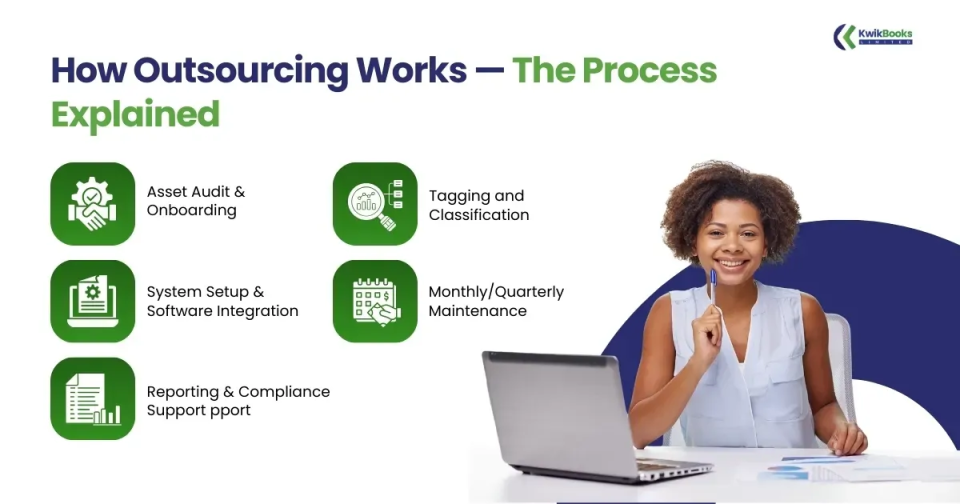
Organisations often wonder how outsourcing fixed asset tasks actually operates in practice. Here’s a typical process:
1. Asset Audit & Onboarding: Specialists begin with a comprehensive audit of existing assets, identifying gaps, correcting records, and setting a baseline.
2. Tagging and Classification: Each asset is tagged and categorised. Barcodes, RFID tags, or digital identifiers allow real‑time tracking and data capture.
3. System Setup & Software Integration: Asset details are imported into advanced management platforms connected with accounting systems, ensuring seamless financial workflows.
4. Monthly/Quarterly Maintenance: Ongoing maintenance includes updates, reconciliation, depreciation reviews, and condition checks all recorded within the system to ensure accuracy.
5. Reporting & Compliance Support: Scheduled reports, audit‑ready documentation, and compliance summaries mean you’re always prepared and informed.
Outsourcing fixed asset responsibilities delivers measurable financial benefits that extend beyond simple bookkeeping:
1. Reduction in Internal Workload: Teams no longer spend hours on manual updates, freeing time for strategic priorities and value‑adding tasks.
2. Avoid Costly Errors and Penalties: Accurate records minimise the risk of misstatements, corrections, and penalties from tax authorities.
3. Predictable Monthly Costs: Instead of fluctuating internal labour costs, outsourcing typically provides a structured pricing model that helps with budgeting.
4. Enhanced Financial Insights: By capturing accurate asset data and depreciation patterns, businesses gain visibility that benefits budgeting, forecasting, and performance analysis.
These outcomes not only improve operational efficiency but also contribute to better financial governance and decision‑making a win‑win scenario for leaders and stakeholders alike.
Selecting an outsourcing partner for asset management is a strategic decision. UK businesses should look for firms that offer:
1. UK Compliance Expertise: A partner with deep knowledge of UK tax law and audit standards ensures your asset reporting meets local regulations.
2. Technology Capabilities: Ensure the partner uses modern, secure software that integrates seamlessly with your accounting systems.
3. Transparent Pricing: Clarity on costs, deliverables, and service levels prevents surprises and builds trust.
4. Experience with SMEs: Smaller companies have different needs than large corporations — choose a partner familiar with your scale and challenges.
5. Proven Track Record: Testimonials, case studies, and measurable outcomes demonstrate reliability and expertise.
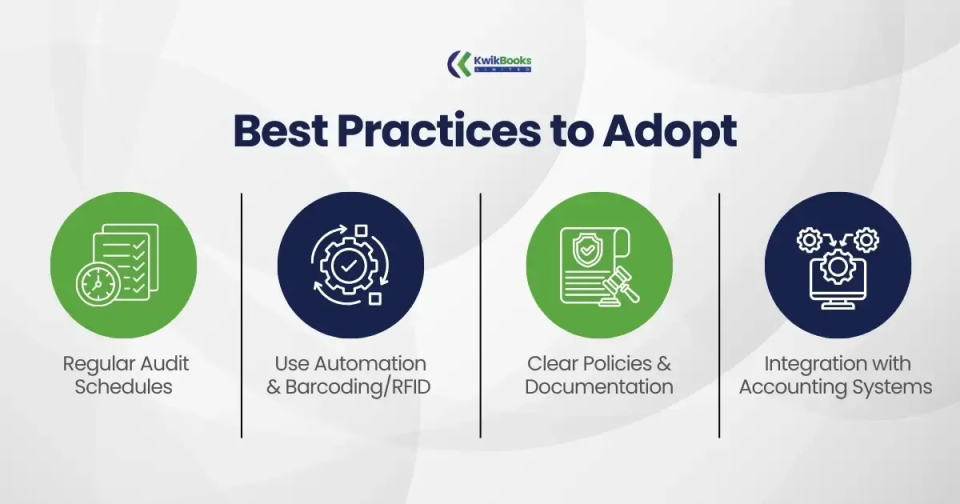
To sustain control and maximise value, UK businesses should adopt the following practices:
1. Regular Audit Schedules: Set consistent dates for verifying asset counts and conditions — don’t wait until year‑end.
2. Use Automation and Barcoding/RFID: Leverage technology for real‑time tracking that eliminates manual errors.
3. Clear Policies & Documentation: Establish documented procedures for asset acquisition, movement, and disposal.
4. Integration with Accounting Systems: Connecting asset data with financial systems improves accuracy and reduces duplication.
These practices form the backbone of any organisation’s successful asset governance strategy.
Fixed assets represent some of the most significant investments a business makes and yet they’re often managed as an afterthought until problems arise. Today, effective Fixed Asset Management is central to financial integrity, compliance with UK standards, and strategic operational control.
From accurate depreciation schedules to real‑time tracking and automated reporting, managing assets well protects value, enhances decision‑making, and reduces organisational risk. For many UK businesses, the most effective path to achieving this is by partnering with experienced specialists who bring technology, expertise, and process discipline to the table.
Outsourcing your asset management doesn’t just eliminate errors it creates clarity, saves time, and gives you space to focus on growth. It transforms asset oversight from a compliance chore into a strategic advantage.
If your business is ready to elevate its asset visibility and strengthen its financial foundation, consider working with seasoned professionals like KwikBooks to review your current asset base and streamline your bookkeeping processes for long‑term success.