
As a freelancer or solopreneur, managing your own business brings a unique set of rewards and challenges. While you focus on growing your client base, delivering services, and maintaining your personal brand, it’s easy to overlook one crucial area: bookkeeping. But here’s the truth: without solid financial management, even the most successful businesses can flounder.
Proper bookkeeping not only ensures that you comply with tax regulations but also provides insights into your cash flow, helps you plan for the future, and protects you from potential financial mishaps. At KwikBooks, a leading bookkeeping service provider in the United Kingdom, we understand the nuances of managing finances for small businesses, freelancers, and solopreneurs. This comprehensive guide will help you adopt the best bookkeeping practices, stay on top of your finances, and ensure that your business runs smoothly.
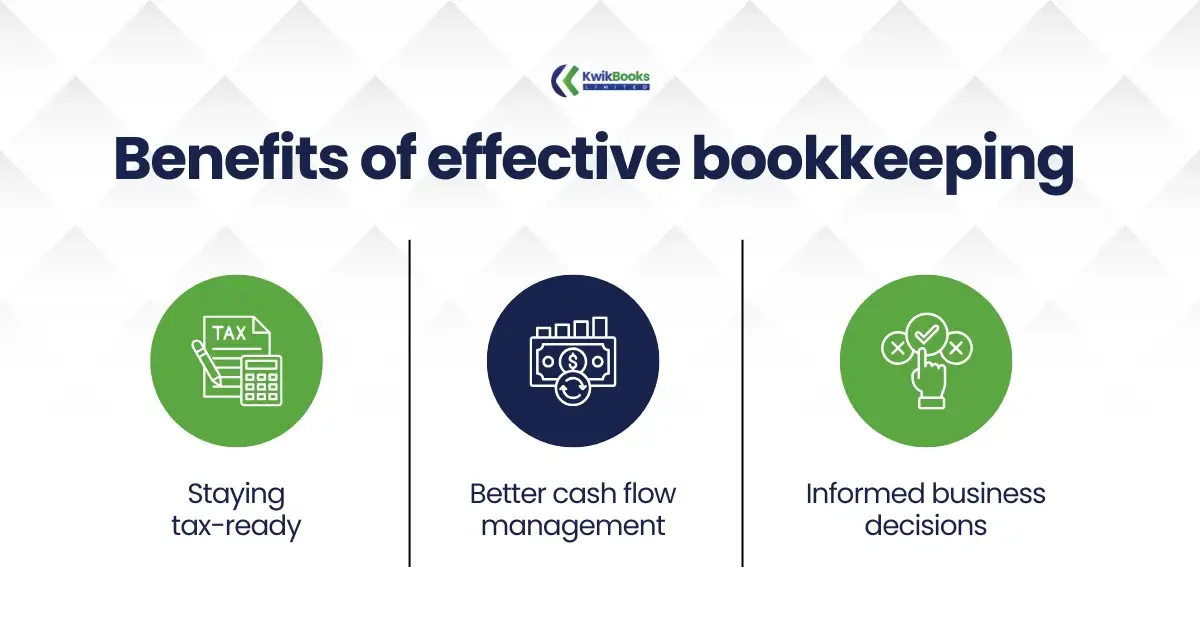
As a freelancer or solopreneur, your financial health directly impacts the success and longevity of your business. Bookkeeping involves tracking, recording, and organizing your income and expenses. It’s not just about compliance with tax laws; accurate bookkeeping gives you the ability to make informed decisions, identify cost-saving opportunities, and ultimately grow your business.
Some benefits of effective bookkeeping include:
Now, let’s dive into the top bookkeeping tips for freelancers and solopreneurs to help you stay on top of your finances and run a more efficient, profitable business.
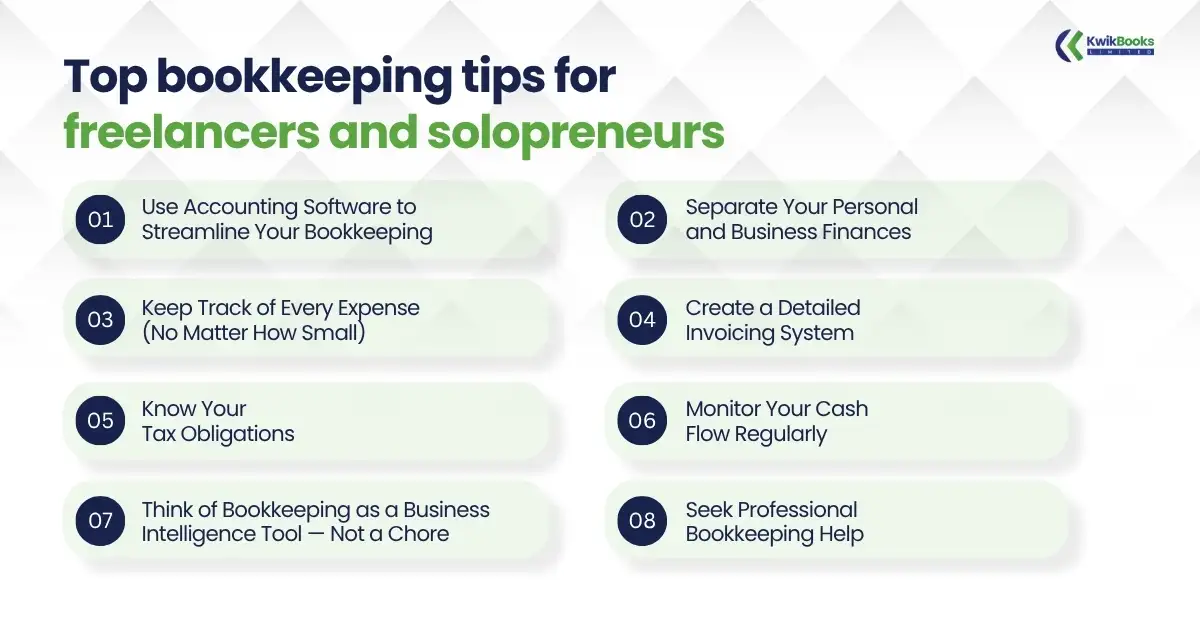
One of the easiest ways to manage your bookkeeping is by using accounting software. Gone are the days of manually tracking your income and expenses in spreadsheets. Modern accounting tools can automate many aspects of your financial management, saving you time and reducing the risk of errors.
At KwikBooks, we recommend using software tailored to the needs of freelancers and small businesses. Solutions like QuickBooks, Xero, and FreeAgent are excellent choices. They can help you:
By automating key aspects of your bookkeeping, you free up time to focus on the areas of your business that truly matter.
As a freelancer or solopreneur, it can be tempting to mix personal and business expenses, but this can create a huge mess when it comes time for tax filing or when you need a clear view of your business’s financial health. Mixing your personal and business finances can lead to confusion and errors that could result in missed deductions or even potential tax audits.
To avoid this:
When your business and personal finances are organized, you’ll find it much easier to track business performance, prepare for tax filings, and manage your cash flow.
One common mistake among freelancers and solopreneurs is not tracking every business-related expense. Even small expenses can add up over time, and failing to record them can lead to missing out on valuable tax deductions.
Keep receipts for all business expenses, including:
Using an expense tracker in your accounting software or mobile apps can help you record transactions on the go and categorize them accordingly. By doing so, you’ll ensure that no deduction is missed when tax season rolls around.
Invoicing is crucial for freelancers and solopreneurs, as it ensures that you get paid for your work. However, invoicing isn’t just about sending a request for payment; it’s about creating a system that ensures you get paid on time and maintains clear financial records.
Here are some key invoicing tips:
By implementing a structured invoicing system, you not only stay on top of your payments, but you also project professionalism to your clients.
As a freelancer or solopreneur, you are responsible for managing your own tax obligations, which means understanding your Self Assessment tax return and National Insurance Contributions (NICs). This can be overwhelming, especially if you’re new to the world of freelancing.
To stay on track:
At KwikBooks, we offer expert advice on tax planning to ensure you stay compliant and avoid any surprises when it comes to your tax return.
Also be aware of the VAT threshold: if your taxable turnover exceeds £90,000 in any rolling 12-month period (current 2024/25 threshold), you must register for VAT. Planning ahead for this milestone can prevent a nasty surprise.
Cash flow is the lifeblood of any business, especially for freelancers and solopreneurs. Poor cash flow management can lead to missed payments, late fees, and, in the worst case, business closure. That’s why it’s essential to monitor your cash flow regularly and ensure that you have enough funds to cover your expenses.
To stay on top of cash flow:
Regularly reviewing your cash flow will allow you to take action before a financial crisis occurs.
Here’s a perspective shift that transforms the way freelancers relate to their finances: your books are not a compliance burden they are a real-time dashboard of your business health. When you review them regularly, patterns emerge. You’ll notice which client types generate the best margins, which months are reliably lean (and need a cash buffer), and which expenses are quietly eating into your profit.
Freelancers who treat their bookkeeping as strategic intelligence, not a tax necessity, grow faster, price themselves better, and weather lean periods with far less anxiety. Numbers tell you the truth about your business that gut instinct often misses.
Quick wins to track: Your average invoice value, your average payment turnaround time, your gross profit margin per project, and your three largest expense categories. Knowing these four numbers puts you ahead of most self-employed professionals.
While it’s crucial to manage your own finances to some extent, there are times when hiring a professional bookkeeper is the best decision. A qualified bookkeeper can take the stress out of managing your finances and ensure that everything is in order.
At KwikBooks, our team of experienced professionals offers comprehensive bookkeeping services for freelancers and solopreneurs across the UK. We can help you:
Outsourcing your bookkeeping allows you to focus on what you do best, growing your business, while ensuring your finances are in expert hands.
Effective bookkeeping is an essential part of managing your freelance or solopreneur business. By implementing the right tools and strategies, such as using accounting software, separating personal and business finances, and keeping track of every expense, you can ensure that your business stays financially healthy and tax-ready.
At KwikBooks, we’re dedicated to helping freelancers and solopreneurs across the UK manage their finances with ease. Whether you need expert bookkeeping advice, software recommendations, or help with tax planning, we’re here to support you every step of the way.
If you’re ready to take control of your business finances and make bookkeeping a breeze, get in touch with KwikBooks today!