
Whether you run a limited company in Manchester, freelance from a home office in Bristol, or let property across the UK, the way you record your finances matters more than ever. With HMRC tightening its grip through Making Tax Digital, sloppy or single-line record-keeping simply won’t cut it. Double-entry bookkeeping is the system that sits behind virtually every set of business accounts, VAT return, and tax filing in the country and understanding it puts you firmly in control of your numbers.
This guide breaks down exactly what double-entry bookkeeping is, how it works in practice, and why it’s become essential for UK businesses navigating an increasingly digital tax landscape.
Double-entry bookkeeping is a method of recording financial transactions in which every transaction affects at least two accounts one debit and one matching credit. The two sides must always be equal and opposite, which is what keeps your books balanced.
The principle dates back to 15th-century Italian merchants, but it remains the global standard precisely because it’s so reliable. Every set of company accounts, VAT return, and Self Assessment in the UK is ultimately built on it. As accounting bodies note, double-entry underpins effectively every bookkeeping and reporting system used worldwide.
Here’s the core idea in plain terms: money never simply “appears” or “disappears,” it moves from one place to another. So each transaction is captured twice, reflecting where the value came from and where it went to.
Double-entry exists to always keep this fundamental equation in balance:
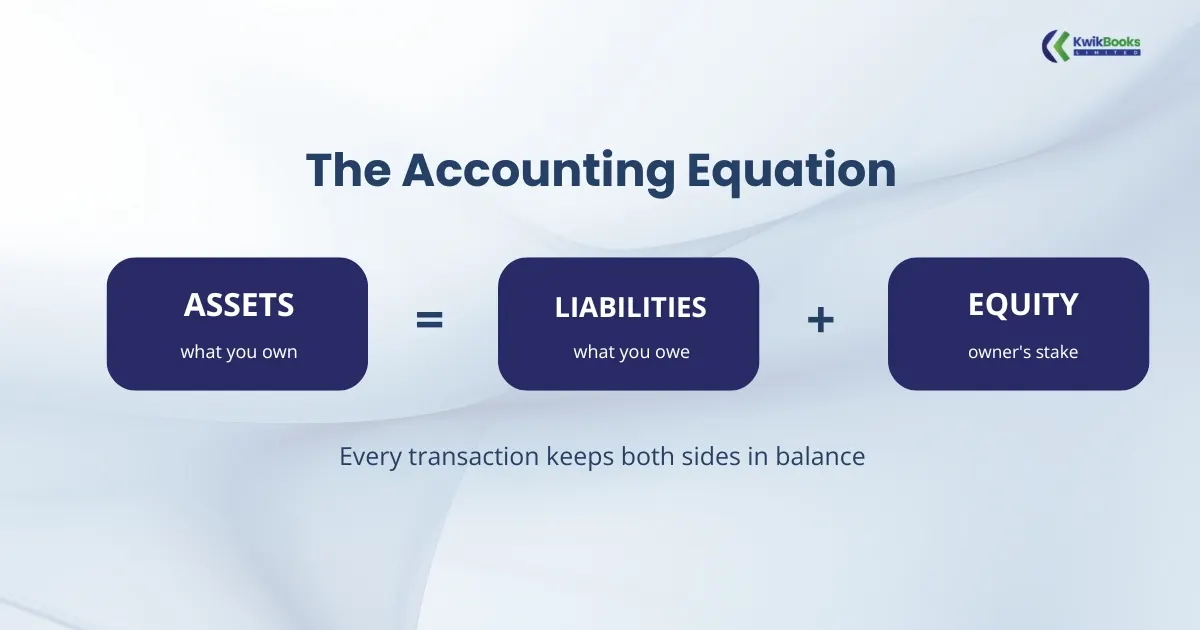
Assets = Liabilities + Equity
Every entry you make must preserve this balance. If one side moves, the other side must move to match. That built-in cross-check is the system’s greatest strength.
The terms “debit” and “credit” confuse most beginners because they don’t mean “minus” and “plus” in the everyday banking sense. In bookkeeping:
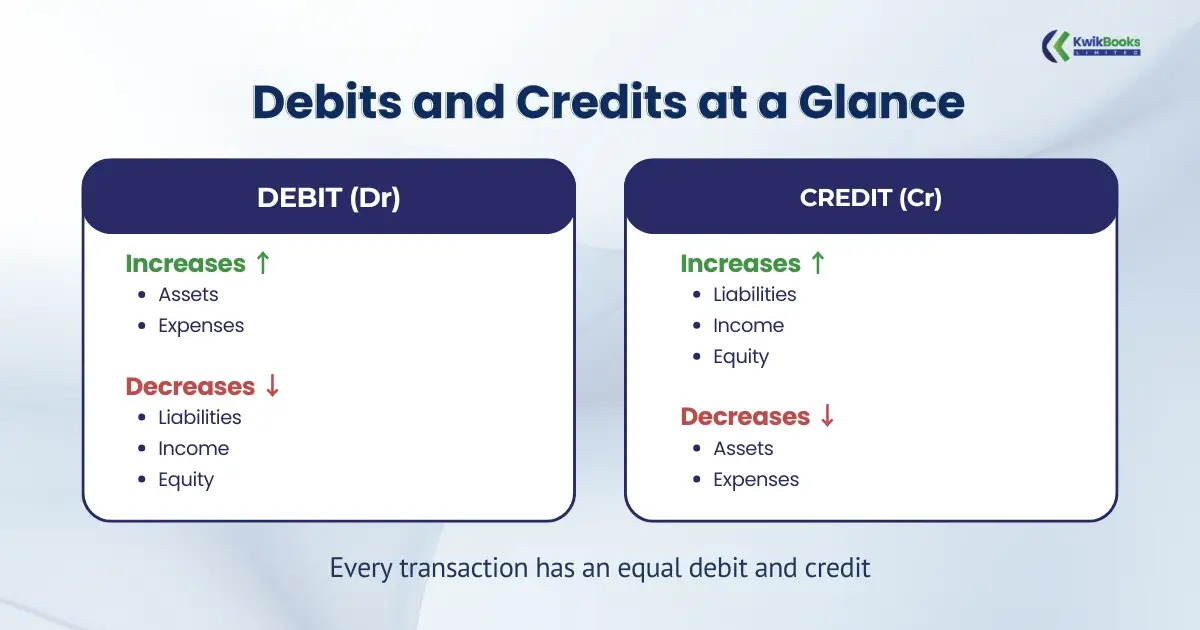
Consider a simple worked example. Suppose your business makes a £500 cash sale:
Account | Debit | Credit |
Bank | £500 |
|
Sales income |
| £500 |
Your bank balance rises by £500 (a debit to an asset), while your sales income rises by £500 (a credit to income). Both sides equal £500 in the books’ balance. As one UK accountancy firm puts it, when you make a sale, your bank balance increases while your stock levels fall, and the resulting entries are simply called debits and credits.
To see why double-entry wins, it helps to contrast it with the simpler single-entry approach many sole traders start out with:
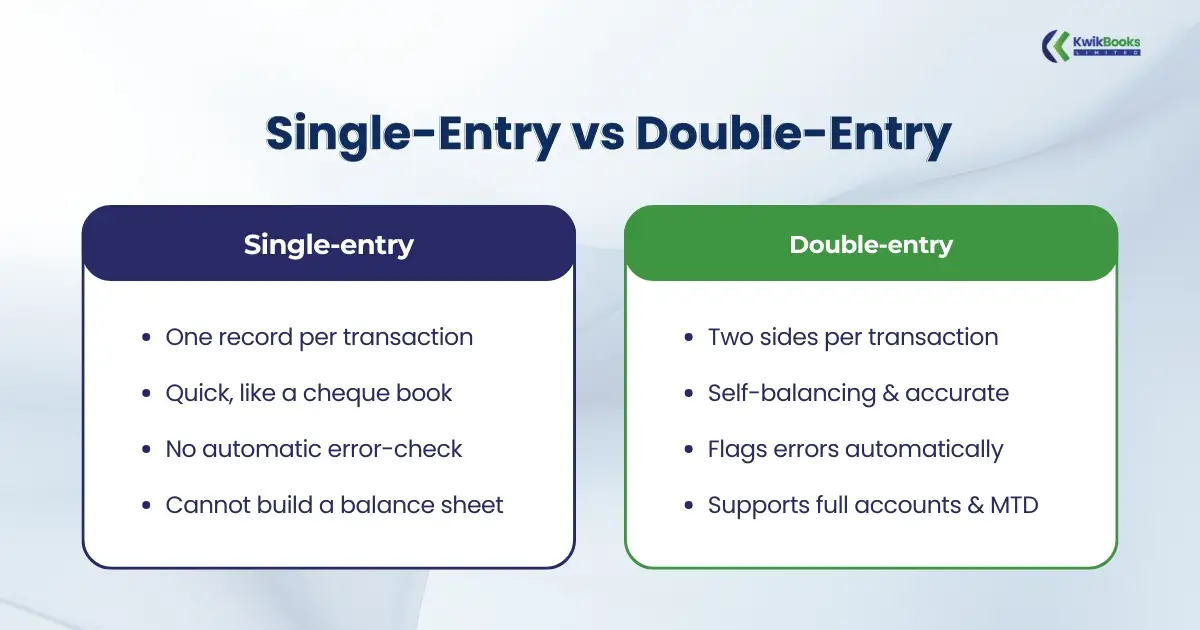
If you’re still weighing up which approach fits your situation, our guide to choosing the right bookkeeping method walks through it in more detail.
Beyond the mechanics, the real question is: why should you care? For UK businesses in 2026, the answer comes down to compliance, accuracy, and genuine commercial insight.
This is the big one. HMRC expects records that clearly show your income, expenses, assets, and liabilities, and double-entry bookkeeping provides exactly the structure needed to meet those expectations and support compliance with Making Tax Digital (MTD).
The MTD rollout makes this urgent rather than theoretical. The mandatory phase of MTD for Income Tax begins on 6 April 2026 for sole traders and landlords with qualifying income over £50,000. The thresholds then step down: from 6 April 2027, it applies to those earning over £30,000, and from 6 April 2028 to those over £20,000.
What does that mean in practice? Affected businesses must:
It’s also worth noting HMRC operates a points-based penalty system for late submissions, where missed quarterly updates accumulate points and can trigger a £200 fine. Solid double-entry records, kept in compatible software, are your best defence against falling foul of these rules. You can always check the latest position directly on the official GOV.UK Making Tax Digital guidance.
Because every transaction has two equal sides, your books should always balance. If they don’t, you’ve made a mistake, and the system tells you immediately. This self-checking quality means errors get spotted early, before they snowball into misreported VAT, inaccurate accounts, or a stressful scramble before a filing deadline.
For VAT-registered businesses in particular, this accuracy is non-negotiable. VAT returns, annual accounts, and tax returns are all built directly on your underlying bookkeeping, so an error at the foundation ripples through everything above it.
Double-entry bookkeeping does far more than keep HMRC happy. By recording both sides of every transaction, it lets you genuinely understand how your business is performing, your profitability, your cash balances, and your trajectory for growth.
In practical terms, a well-maintained double-entry system lets you:
Good cash flow visibility, in particular, gives you an honest picture of business health and the confidence to make the right calls at the right time.
As UK tax reporting becomes steadily more digital, organised records matter more with each passing year. Businesses that embrace accurate, continuous bookkeeping don’t just avoid penalties they unlock faster financial insight, better cash flow management, and lower error risk.
The shift from last-minute, once-a-year filing to ongoing record-keeping is the single biggest change MTD introduces. Adopting double-entry bookkeeping now, ideally within MTD-compatible software, builds exactly the habits that will keep you compliant and in control through 2026 and beyond.
Double-entry bookkeeping isn’t dusty accounting theory, it’s the practical backbone of every compliant, well-run UK business. By recording two sides of every transaction, it keeps your books balanced, catches mistakes early, satisfies HMRC’s expectations, and gives you a clear, trustworthy view of your finances.
With Making Tax Digital expanding from April 2026, there has never been a better moment to get your bookkeeping onto a proper double-entry footing. Start by understanding the basics covered here, choose software that grows with you, and consider professional support if your accounts are becoming complex.
Ready to take the next step? Explore our bookkeeping software and resources at KwikBooks to keep your records accurate, digital, and MTD-ready so you can spend less time worrying about compliance and more time running your business.