
Making Tax Digital (MTD) represents the most significant shift in how UK businesses record their finances and communicate with HMRC in decades. The old routine was well established: collect your receipts, total everything up once a year, and submit a single Self Assessment return. That approach is being retired for a growing number of sole traders and landlords, and it is your everyday bookkeeping that now sits at the centre of the new requirements.
At KwikBooks, we partner with small and medium-sized businesses right across the UK, keeping their records accurate and their filing on track with HMRC. This guide breaks down what MTD genuinely means for your bookkeeping, who needs to comply and on what timeline, the deadlines you cannot afford to overlook, and the practical steps that will help you get ahead rather than react at the last moment.
Making Tax Digital is HMRC’s initiative to bring tax reporting fully online. Rather than filing one return each year, affected businesses are required to maintain their income and expense records digitally and send regular updates to HMRC through compatible software. HMRC’s stated aims are to cut down on errors, narrow the tax gap, and make record-keeping more accurate as the year progresses.
The programme is arriving in waves. It has already applied to every VAT-registered business for several years. The next significant stage is MTD for Income Tax, which brings sole traders and landlords into scope once their income passes certain thresholds. Corporation Tax for limited companies remains outside MTD for now, so companies continue submitting their CT600 in the traditional way.
This is about far more than filing frequency. It reshapes the entire relationship between a business and its books. Previously, records could be assembled after the fact; plenty of businesses left everything until the final weeks before the January deadline. Under MTD, records must be built and kept digitally in real time, because HMRC expects a summary several times throughout the year. In effect, the system rewards those who treat bookkeeping as a continuous habit rather than a yearly scramble.
It helps to be precise about what MTD does and does not alter. It does not raise the amount of tax you owe, and it does not touch the reliefs, allowances, or expenses you are entitled to claim. What changes is the mechanics of staying compliant: the format your records take, the software you rely on, and how often you report. Businesses already working in cloud accounting will find the move fairly seamless. Those still relying on paper or simple spreadsheets face a more meaningful adjustment in how their books are managed, and the sooner that adjustment is made, the smoother it tends to be.
MTD for Income Tax is being introduced in stages, determined by your qualifying income, the combined gross total from self-employment and property before any expenses come out. Employment earnings, pensions, dividends, interest, and capital gains are all excluded from this calculation.
The rollout follows a tiered set of thresholds:
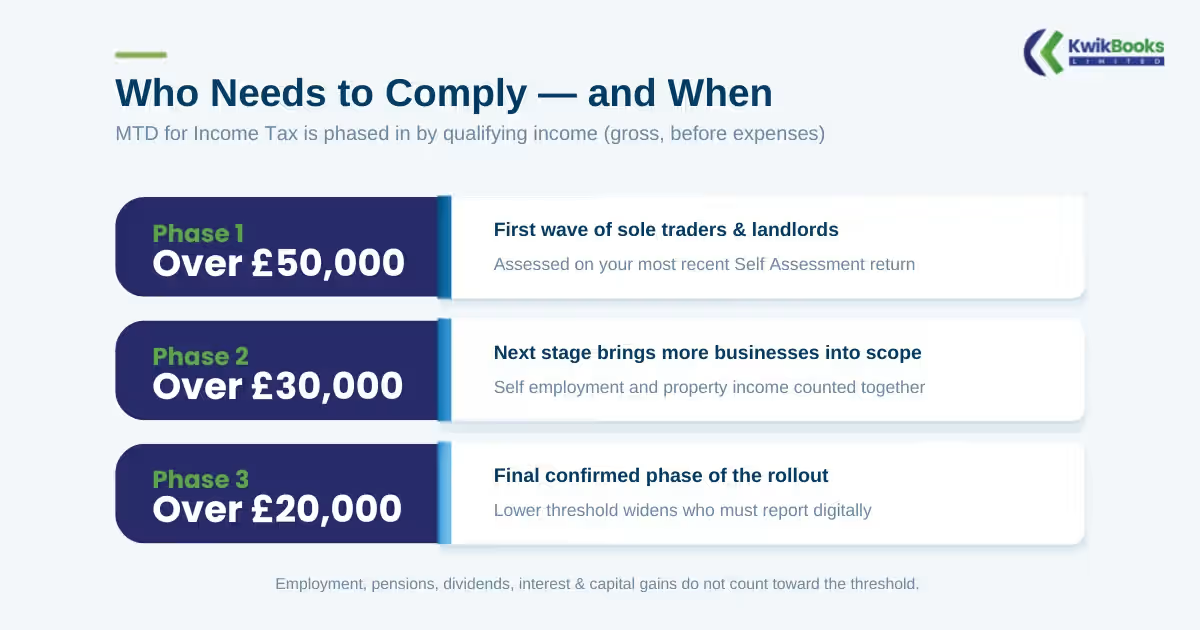
HMRC works out your entry point from the latest Self Assessment return filed before your phase starts. Where you earn from both self-employment and property, the two are combined for the threshold test. A small number of exemptions and deferrals exist, including for people who are genuinely digitally excluded because of age, disability, or location. You can verify your own position through HMRC’s official MTD guidance.
If you are uncertain whether you fall into an early wave, the wisest move is to review your gross income now rather than waiting for contact from HMRC. Sign-up is not automatic; registration is a manual step that you or your accountant must complete.
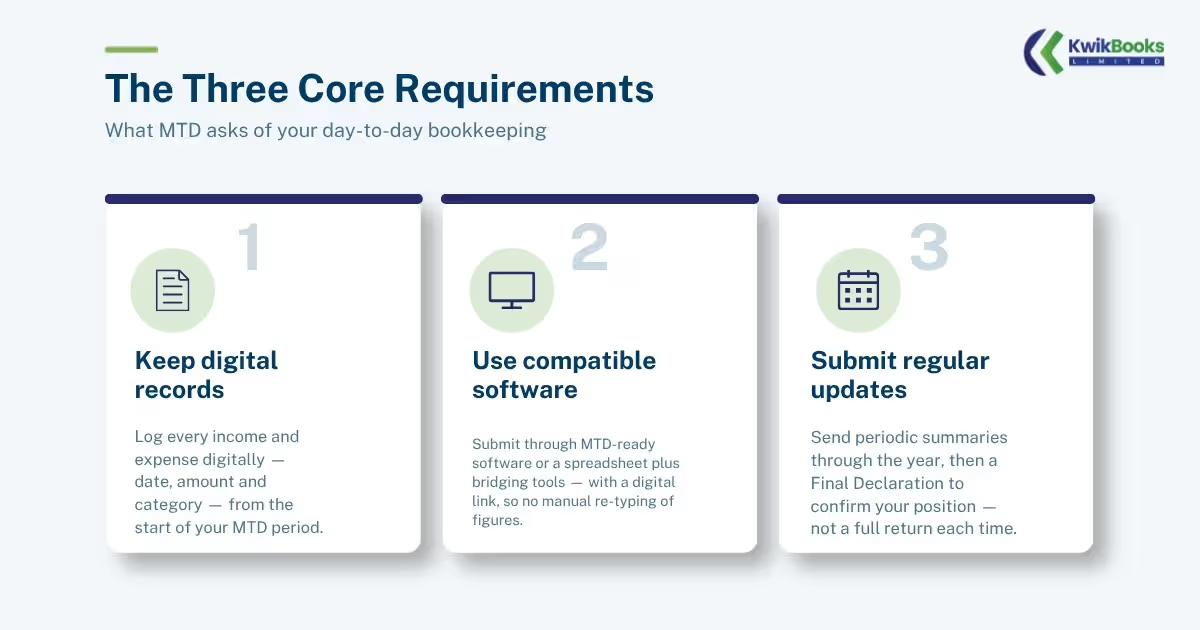
MTD introduces three obligations that land squarely on your bookkeeping process. Grasping each one is central to preparing properly, so we have set them out point by point below.
The MTD reporting calendar is fixed and consistent. It applies no matter what your accounting year-end is, which regularly takes businesses by surprise. The periodic update deadlines fall on:
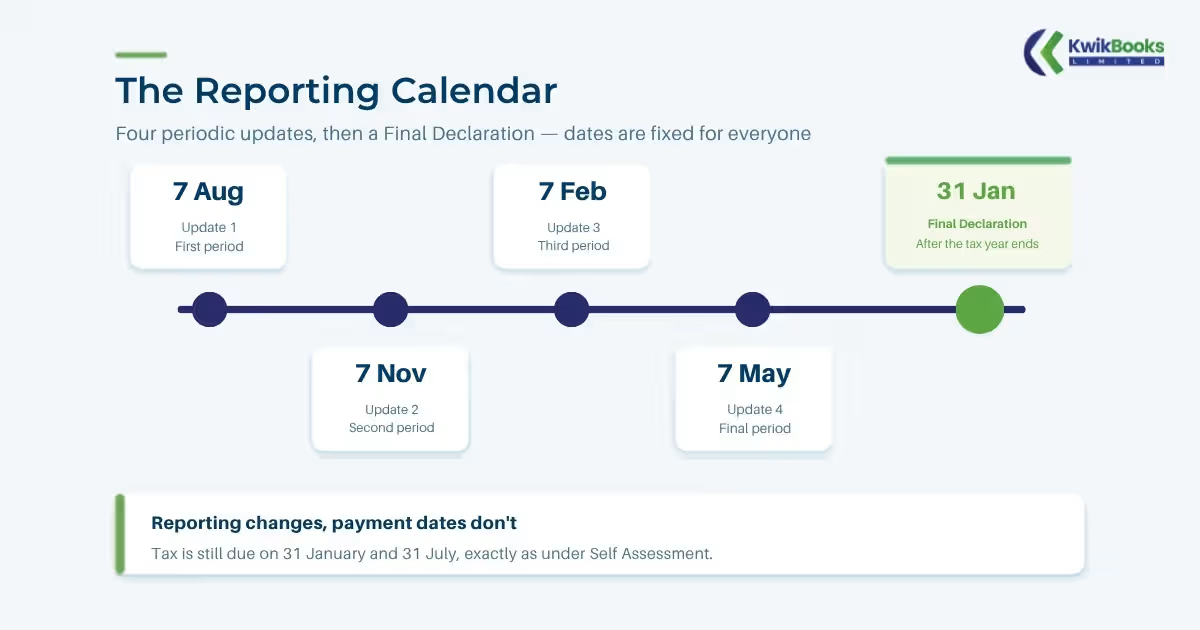
The Final Declaration is due by 31 January after the end of the tax year. Crucially, MTD changes how often you report, not when you pay. Your tax payment dates stay put at 31 January and 31 July, exactly as they were under Self Assessment.
There is one important concession for those entering the first wave. HMRC has confirmed a “soft landing” for the initial year, during which no penalties apply for late periodic updates in that first year only. This is best understood as a cushion against genuine early-stage errors rather than a licence to delay. You still have to keep digital records and submit every required update before you can file your tax return, and penalties can still be applied to a late tax return or a late payment.
From the following year onward, a points-based penalty system takes effect. Each missed update or Final Declaration earns a single penalty point, and once you accumulate four points, HMRC issues a £200 penalty, with a further £200 for every subsequent late submission. Points are cleared after a sustained period of compliance. The full detail is set out in HMRC’s penalties guidance for MTD.
It is easy to see MTD as nothing more than an administrative obstacle. In truth, it raises the stakes around how good your records are. Because you now report to HMRC several times a year rather than once, the accuracy of your bookkeeping is put to the test far more often, and HMRC’s capacity to detect inconsistencies is noticeably stronger in a digital setting.
Frequent digital reporting lets HMRC cross-check what you submit against third-party information such as bank feeds, rental platform data, and contractor payment records. That means records which do not stand up to examination are more likely to be flagged, not less. Consistent, accurate bookkeeping is no longer merely good practice; it is your strongest safeguard.
There is a real upside as well. Businesses that maintain clean digital records throughout the year gain something genuinely useful: a live view of their finances. Rather than uncovering their tax position in a panic each January, they can track cash flow, profitability, and upcoming liabilities as the year unfolds. This makes planning, budgeting, and confident decision-making far easier. Many of the businesses we support find that once the systems are running, MTD compliance becomes routine instead of stressful, and the bonus is a genuinely sharper understanding of how the business is doing.
Preparation is manageable when you begin early. These are the practical steps we recommend to every client approaching their MTD phase:
Making the switch early is the single most effective thing you can do. It lets you build accurate records, learn your software without pressure, and reach your first deadline already prepared.
A few common missteps are worth sidestepping as you get ready. The first is treating a periodic update as though it were a full tax return and over-complicating it; it is only a summary, with final adjustments coming at the Final Declaration stage. The second is breaking the digital link by manually copying totals between a spreadsheet and separate submission software, which HMRC does not allow. The third, and most expensive, is treating the penalty-free first year as an excuse to put off getting organised. That grace period exists to absorb honest mistakes while everyone settles in, not to justify delay, and it vanishes entirely once the points-based penalties come into full force.
Making Tax Digital does not need to be a source of stress. At KwikBooks, we are UK-based bookkeeping specialists, certified in Xero and QuickBooks, helping sole traders, landlords, and growing businesses stay fully compliant with HMRC. From configuring your cloud accounting system to handling your VAT returns and submissions and keeping your records accurate all year round, our team takes care of the numbers so you can concentrate on your business.
If MTD affects you or you simply want your bookkeeping in capable hands ahead of the change, we would be glad to help you get ready. Explore our services or get in touch for a free consultation, and begin your move to digital tax with confidence.
This article is for general information and reflects HMRC guidance at the time of writing. Tax rules and thresholds can change, so always confirm your specific position with HMRC or a qualified professional before making decisions.