
Good bookkeeping rarely makes headlines, but bad bookkeeping quietly sinks businesses. For today’s UK SMEs juggling Making Tax Digital, VAT thresholds, late-paying clients, and tighter margins, the difference between clean books and chaotic ones often decides whether a business grows, stalls, or fails.
Plenty of guides list the obvious slip-ups: forgetting receipts, mixing personal and business accounts, skipping reconciliations. Those matters, and we won’t ignore them. But this guide deliberately digs into the less-discussed mistakes and the strategic and compliance blind spots that catch out otherwise sensible UK business owners. Avoid these, and you’ll be in a far stronger position than most of your competitors.
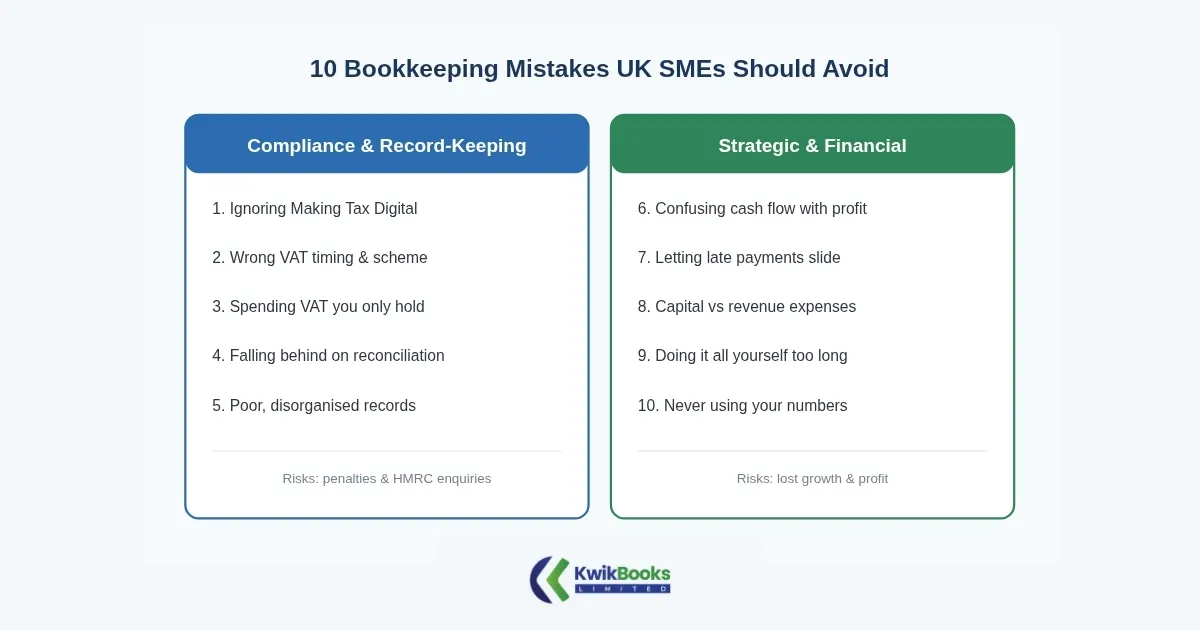
These are the errors that attract penalties, trigger HMRC interest, and create stressful scrambles before deadlines. They’re also the most avoidable, usually requiring nothing more than a consistent routine and the right software. UK SMEs operate in one of the more demanding compliance environments for small businesses, with VAT, PAYE, Corporation Tax, and now Making Tax Digital all making competing demands on the same set of records. Getting the foundations right here protects everything else.
MTD is no longer a distant concern. For VAT-registered businesses, it’s already mandatory, and MTD for Income Tax is now phasing in for sole traders and landlords, beginning with those whose qualifying income is over £50,000 and stepping down to lower income bands in the following years. Too many SMEs treat compatible software as a “later” problem, then rush a migration mid-year. The fix is to adopt MTD-compatible, digital record-keeping now, even ahead of your deadline, so the transition is gradual rather than panicked. Our guide to getting MTD-ready with the right software walks through how to do this calmly.
Many SMEs either register for VAT late (breaching the threshold without noticing) or pick the wrong scheme for their situation: Standard, Flat Rate, or Cash Accounting. Each behaves very differently for cash flow. Misjudging the date you cross the registration threshold can lead to backdated VAT liabilities you never collected from customers. Review your rolling 12-month turnover monthly, and confirm your chosen scheme still suits your margins as you grow.
This is a subtle but dangerous habit. VAT charged on sales isn’t revenue it’s money you’re holding on HMRC’s behalf. Businesses that spend it during a good month face a painful shortfall when the return falls due. The disciplined fix is to set aside VAT (and PAYE, and Corporation Tax provisions) in a separate account the moment it lands, so the money is there when HMRC asks for it.
Reconciling your records against your bank statements is the single most effective error-catching habit in bookkeeping, yet it’s the first thing busy owners drop. Skipping it lets duplicate entries, missed transactions, and bank errors accumulate silently until your accounts no longer reflect reality. Reconcile at least monthly; with cloud software and bank feeds, much of this can be near-automatic.
HMRC requires you to keep records that support every figure on your return, and generally to retain them for at least six years. Loose receipts, missing invoices, and undocumented cash transactions leave you exposed in an enquiry. Digitise everything. Most modern bookkeeping tools let you photograph a receipt and attach it directly to the transaction so your paper trail is complete and searchable.
Compliance errors rarely announce themselves. They build up quietly, then surface all at once, usually at a deadline or during an HMRC enquiry. The common thread is delay: each mistake above stems from putting off a small, regular task until it becomes a large, urgent one. Building light-touch weekly and monthly routines is what separates the businesses that stay calm at year-end from those that don’t.
Compliance keeps you out of trouble; strategy helps you grow. These mistakes won’t necessarily earn a penalty, but they quietly erode profitability and weaken decision-making, and because they don’t come with a fine or a deadline, they’re easy to ignore for years. The SMEs that pull ahead tend to be the ones that treat their books not as a tax obligation but as a real-time dashboard for running the business.
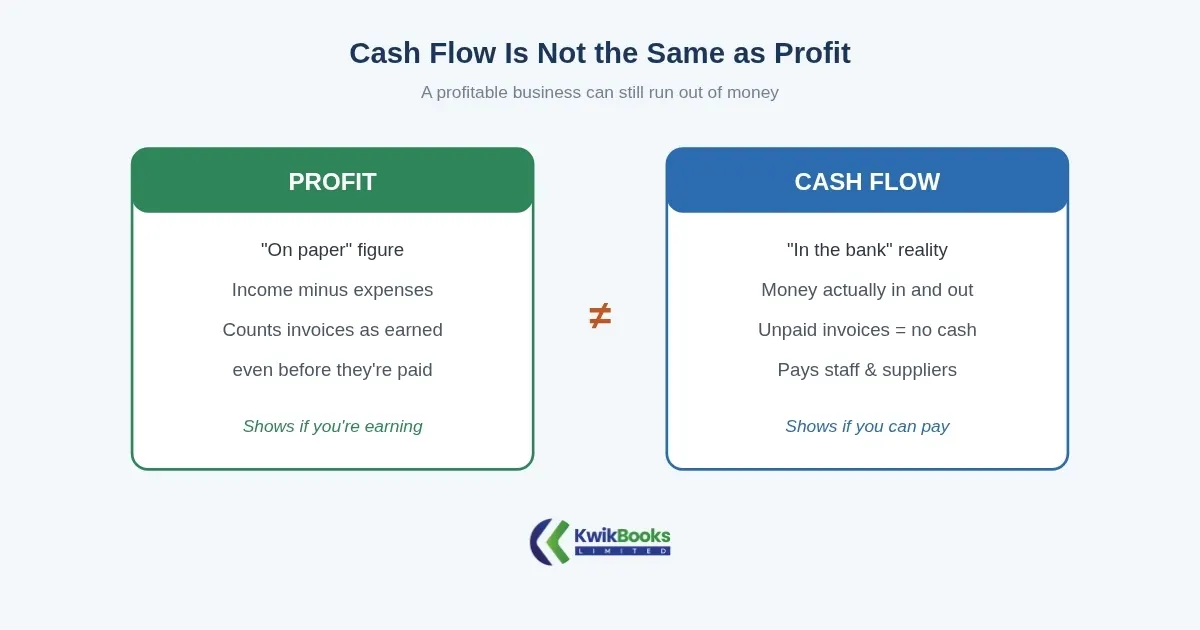
A profitable business can still run out of money, and many do. Profit is an accounting concept; cash is what actually pays your suppliers and staff. SMEs that watch only their profit-and-loss statement, while ignoring the timing of money in and out, can be blindsided by a cash crunch despite “doing well on paper.” Monitor a simple cash flow forecast alongside your P&L so you always know what’s genuinely available.
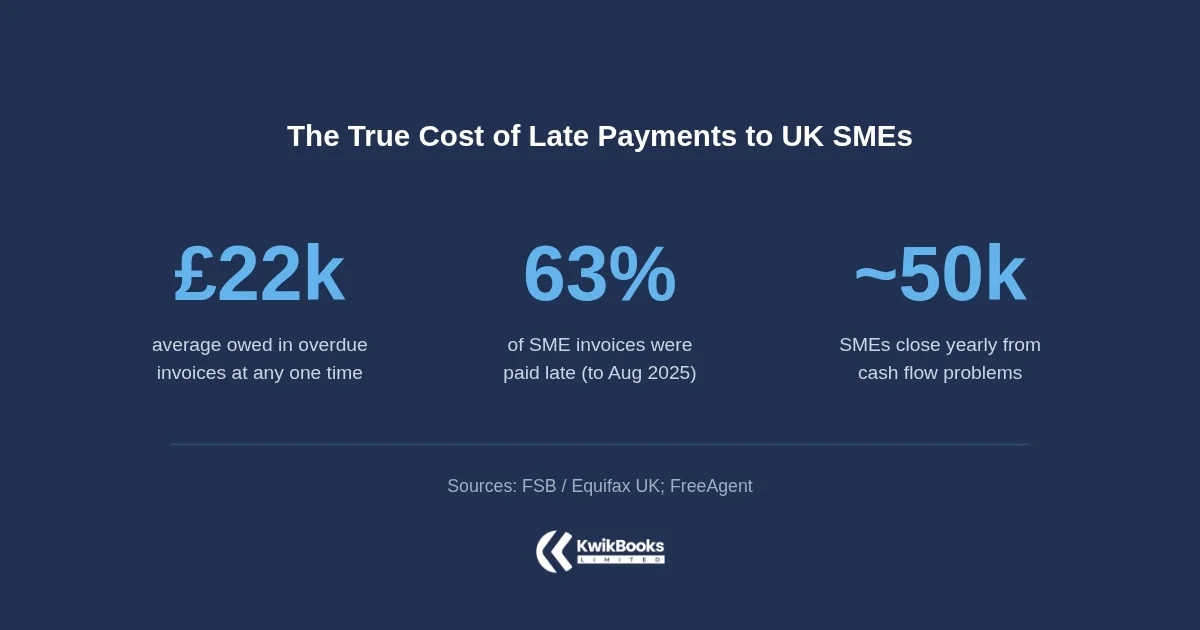
This is arguably the biggest financial threat to UK SMEs today. Research from the Federation of Small Businesses indicates that around 50,000 small businesses close each year due to cash flow problems primarily caused by late payments, with the average SME owed roughly £22,000 in overdue invoices at any one time. Separate analysis from Free Agent found that almost two-thirds of invoices sent by UK SMEs in the year to August 2025 were paid late, and the Small Business Commissioner estimates affected businesses spend around 86 hours each year simply chasing what they’re owed. That’s time and capital your business can’t afford to lose. Chasing payments is unglamorous, but it’s a survival. Send invoices promptly (delayed invoicing is itself a leading cause of delayed payment), set clear payment terms in writing, automate reminders, consider asking for deposits on larger jobs, and check whether new clients hold a Fair Payment Code award before extending credit. For more, the Small Business Commissioner offers free guidance and a complaints route against persistent late payers.
Buying a laptop and paying the electricity bill are treated very differently for tax. Revenue expenses (rent, utilities, stock) are deducted in the year incurred; capital expenses (equipment, vehicles) are treated as assets and may attract capital allowances over time. Lumping them together distorts your profit and can mean missed tax relief or incorrect returns. When in doubt, flag larger purchases for review rather than guessing.
Founders are resourceful, and early on, DIY bookkeeping makes sense. But as transactions multiply, the hours you spend wrestling with the books are hours not spent winning customers, and the risk of costly errors rises. Recognise the tipping point. Bringing in a qualified bookkeeper or accountant, or moving to capable software, usually pays for itself in time saved, deductions captured, and penalties avoided. Knowing when to delegate is a strength, not a weakness.
The final and most overlooked mistake: keeping books purely for compliance and never using them. Your bookkeeping is a goldmine of insight which products are most profitable, which months are tight, where costs are creeping up. SMEs that review management figures monthly make sharper, faster decisions than those who only look once a year at tax time. Set a recurring date to read your numbers and ask what they’re telling you.
Where the first set of mistakes risks penalties, this second set quietly caps your growth. Each one represents information you already possess but aren’t acting on cash position, customer payment behaviour, true cost structure, profitability by line. Treating bookkeeping as a living management tool, rather than a yearly chore, is what turns accurate records into better business decisions.
The most damaging bookkeeping mistakes for UK SMEs aren’t usually dramatic they’re small, repeatable habits that compound over time. Falling behind on MTD, spending VAT you’re only holding, ignoring late payments, or never reading your own numbers: each feels minor in the moment but expensive in hindsight.
The good news is that every mistake here has a straightforward fix, and most come down to two principles: keep your records digital and current, and actually use what they tell you. Build simple weekly and monthly routines, lean on capable software, and bring in professional help when complexity outgrows your time.
If you’d like a simpler, more reliable way to keep your books accurate and MTD-ready, explore the tools and resources at KwikBooks built to help UK SMEs avoid these exact mistakes and stay firmly in control of their finances.