
Financial fraud is a growing concern for businesses across the world. Whether you’re a small business owner or managing a larger enterprise, the risk of fraudulent activities can have a detrimental impact on your finances, reputation, and overall operations. While there is no one-size-fits-all approach to preventing fraud, there is one essential tool that every business should use to safeguard against financial crimes: bookkeeping.
In this blog, we’ll explore how bookkeeping plays a crucial role in detecting and preventing financial fraud, and how you can implement best practices in your business to protect yourself from potential financial crimes.
Bookkeeping is the systematic recording, organizing, and managing of financial transactions within a business. It provides a detailed record of all income, expenses, and other financial activities. Bookkeeping forms the foundation for financial reporting and helps business owners maintain an accurate financial picture.
There are two primary types of bookkeeping systems: single-entry and double-entry.
Additionally, businesses can either maintain their bookkeeping manually or use software solutions like QuickBooks or Xero to automate the process. These tools simplify the bookkeeping process and can provide real-time insights into the financial health of the business.
Financial fraud is an ever-present threat to businesses, particularly small to medium-sized enterprises (SMEs). According to a study by the Federation of Small Businesses (FSB), nearly 50% of small businesses have experienced some form of fraud, and the consequences can be severe, both financially and reputationally.
Small businesses often have limited resources to invest in advanced fraud detection systems or hire a dedicated team to handle fraud prevention. This makes them prime targets for financial criminals. Moreover, in smaller organizations, employees may have multiple responsibilities, which can increase the risk of fraud going undetected.
Bookkeeping is not just about tracking transactions it also plays a crucial role in preventing fraud. A well-maintained and transparent bookkeeping system provides numerous benefits when it comes to detecting and preventing fraudulent activities.
A key advantage of effective bookkeeping is its ability to spot discrepancies or irregularities in financial transactions. Regularly reviewing financial records makes it easier to spot signs of fraud, such as missing records or unusual transaction patterns. Bookkeeping systems can also flag transactions that don’t align with expected business operations, allowing for early intervention.
Accurate and up-to-date financial statements are essential for transparency. A business with proper bookkeeping can easily generate reports like balance sheets and income statements, which provide a clear picture of its financial health. These reports can be reviewed regularly to ensure that all transactions are legitimate and accounted for.
When businesses maintain clear financial records, they’re more likely to detect fraud before it escalates, and any irregularities can be promptly addressed.
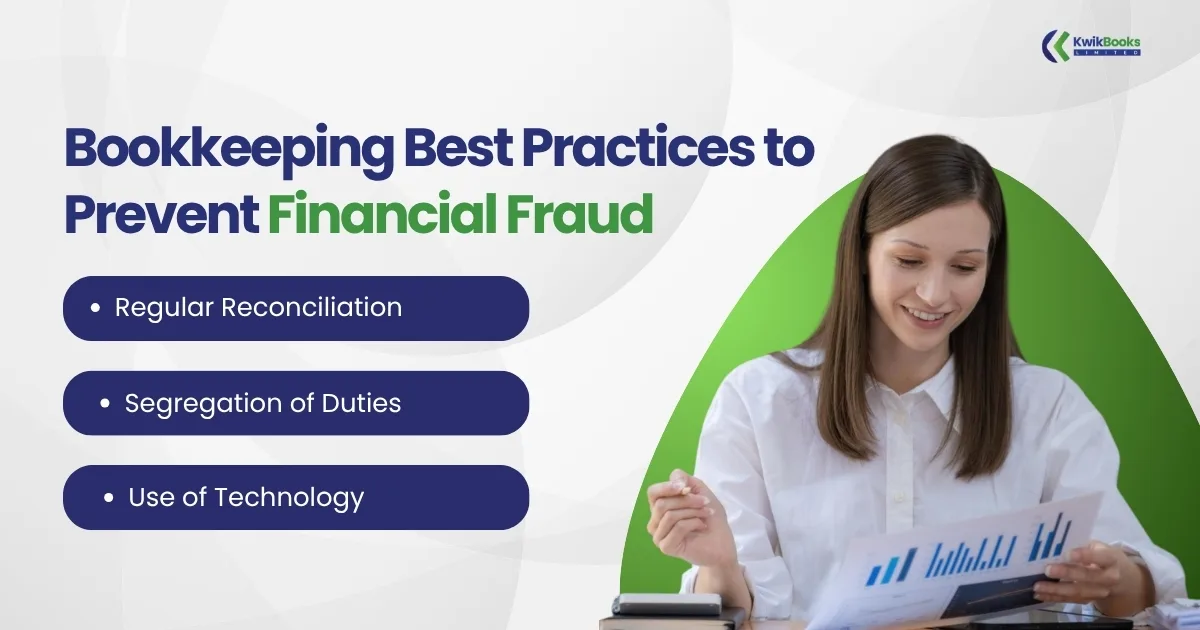
To maximize the role of bookkeeping in fraud prevention, businesses must adopt best practices that ensure their financial records are accurate, transparent, and regularly audited. Below are some essential practices to consider:
Reconciliation involves comparing internal financial records with external sources, such as bank statements. Regularly reconciling your financial records ensures that no transactions go unaccounted for and helps identify discrepancies early. The earlier discrepancies are caught, the easier they are to investigate and correct, preventing fraud from spiraling out of control.
One of the most effective fraud prevention strategies is the segregation of duties. This means that no single employee should be responsible for both recording and authorizing financial transactions. For example, the person who processes payroll should not be the same person responsible for bookkeeping. By dividing responsibilities, businesses reduce the likelihood of fraud occurring undetected.
In today’s digital age, technology plays a vital role in fraud detection. Accounting software such as QuickBooks, Xero, or other fraud detection systems can automate the process of tracking financial transactions and flag any unusual activities. These systems offer advanced features that can alert businesses to potential fraud risks, providing an additional layer of protection.
A small business in the UK was able to prevent a major embezzlement scheme by implementing regular internal audits and reconciling bank statements. The bookkeeper noticed discrepancies between the recorded expenses and actual bank transactions, which led to the discovery of fraudulent activity.
Another business implemented automated bookkeeping software that was integrated with their supplier accounts. This system automatically cross-referenced invoices against delivery records, allowing them to quickly identify and reject fraudulent invoices from a third-party supplier.
These real-life examples demonstrate how consistent and transparent bookkeeping practices can help businesses detect and prevent financial fraud before it causes irreparable damage.
Failing to implement sound bookkeeping practices can have devastating consequences. Not only can poor financial records make it harder to detect fraud, but the fraud itself can go unnoticed until it’s too late.
The financial impact of fraud can be significant, often leading to cash flow problems, loss of profits, and legal penalties. Additionally, the damage to a company’s reputation can be long-lasting, affecting customer trust and business relationships.
Businesses involved in fraudulent activities can face severe legal consequences, including fines, penalties, and even criminal charges. This can be particularly damaging for SMEs that rely on their reputation and customer trust.
At KwikBooks, we understand the importance of accurate and reliable bookkeeping in protecting your business from financial fraud. As a leading bookkeeping service provider in the UK, we specialize in offering tailored solutions to help businesses of all sizes maintain transparent financial records and prevent fraud.
Our team of experienced bookkeepers works closely with you to ensure that all your financial transactions are tracked accurately and in compliance with UK regulations. We use the latest accounting software and best practices to ensure your financial records are always up-to-date and protected from fraud.
We offer scalable bookkeeping services that can be tailored to suit the unique needs of your business. Whether you’re a small startup or a growing SME, we have the expertise and tools to safeguard your finances and provide peace of mind.
Bookkeeping is far more than just a tool for managing finances it is a crucial part of preventing financial fraud in your business. By adopting best practices such as regular reconciliation, segregation of duties, and leveraging technology, you can safeguard your business from fraudulent activities and ensure long-term financial success.
At KwikBooks, we’re here to help you protect your business with expert bookkeeping services. Contact us today for a consultation and let us help you safeguard your finances against fraud.